
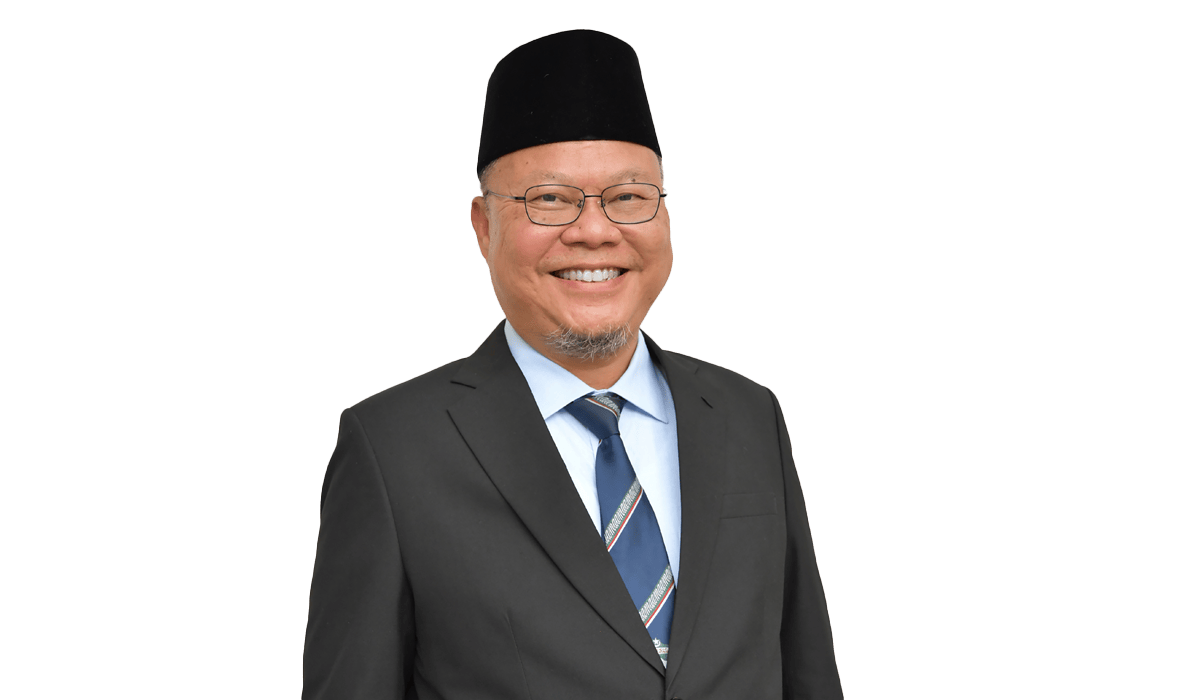
Herman Bin Cher Ma’in is Superintendent of the Joint Madrasah System (Secondary) and Principal of Madrasah Aljunied Al-Islamiah at MUIS.
Religion often serves as the glue that binds people. For the Islamic Religious Council of Singapore (MUIS), this sense of community underpins its mission: to care for the diverse interests of Singapore’s Muslim community while nurturing the Singaporean Muslim identity. It is this vision that drives individuals like Herman Bin Cher Ma’in, Beetsma Diana Husna Zamily, and Muhammad Firdaus Bin Hassan to dedicate themselves to the cause.
Heeding a Higher Calling
Herman’s journey with MUIS is rooted in decades of teaching across national and madrasah schools, alongside active community roles such as serving on the Al-Khair Mosque Management Board and advising its English Madrasah programme. What drew him to MUIS was its vision of excellence in Islamic education and its commitment to developing both students and educators, which aligned with his belief in education as a powerful social leveller. “MUIS stood out as an organisation that not only shared this vision but actively worked towards it through continuous improvement of madrasah curriculum and academic standards,” he said.
Similarly, Beetsma saw MUIS as a place where professional expertise could make a real impact. Her path took her from one of the Big Four accounting firms, where she began her career as an external auditor, to MUIS. “It’s rare to find a place where one’s skills can align so closely with meaningful service,” she enthused.
For Firdaus, the appeal was the diversity of opportunities to serve the Muslim community. “During my interactions with a MUIS officer who has since become my colleague, I discovered the remarkable breadth of opportunities available within the organisation,” he recalled. “MUIS’ diverse portfolio spanning mosques, madrasahs, zakat, halal certification, finance, and policy development convinced me it was the ideal place to build and expand my career.”
Work Rooted in Values
Despite their different paths, Herman, Beetsma and Firdaus all share a common commitment: using their skills and experience to serve the Muslim community meaningfully.
Today, Herman holds dual roles as Superintendent of the Joint Madrasah System (Secondary) and Principal of Madrasah Aljunied Al-Islamiah. This dual perspective allows him to oversee integrated curricula that blend Islamic sciences with modern subjects while staying connected to the challenges on the ground.
“My vision is to help develop madrasah graduates who are not only well-versed in Islamic knowledge but also confident, competent individuals who can thrive in our modern, multicultural society,” Herman shared.
As Head of Governance and Standards, Beetsma strengthens systems that ensure halal certification is transparent and credible. Guided by the principle of amanah — trust coupled with responsibility — she works to uphold confidence in the systems that allow Muslims to practice their faith.
“In governance and certification, every decision we make affects businesses, consumers, and the wider community. That’s why I strive to handle my role with honesty, fairness, and care,” she said with conviction.
Firdaus, a policy officer in the One Mosque Sector, is also driven by amanah. He develops initiatives like the Finance Officer Mentorship programme, pairing experienced officers with those needing support, improving governance, reducing errors, and creating sustainable knowledge transfer across mosques.
“There’s a particular satisfaction in knowing that the policies we develop help build and maintain the trust that enables mosques to run impactful programmes,” he mused.
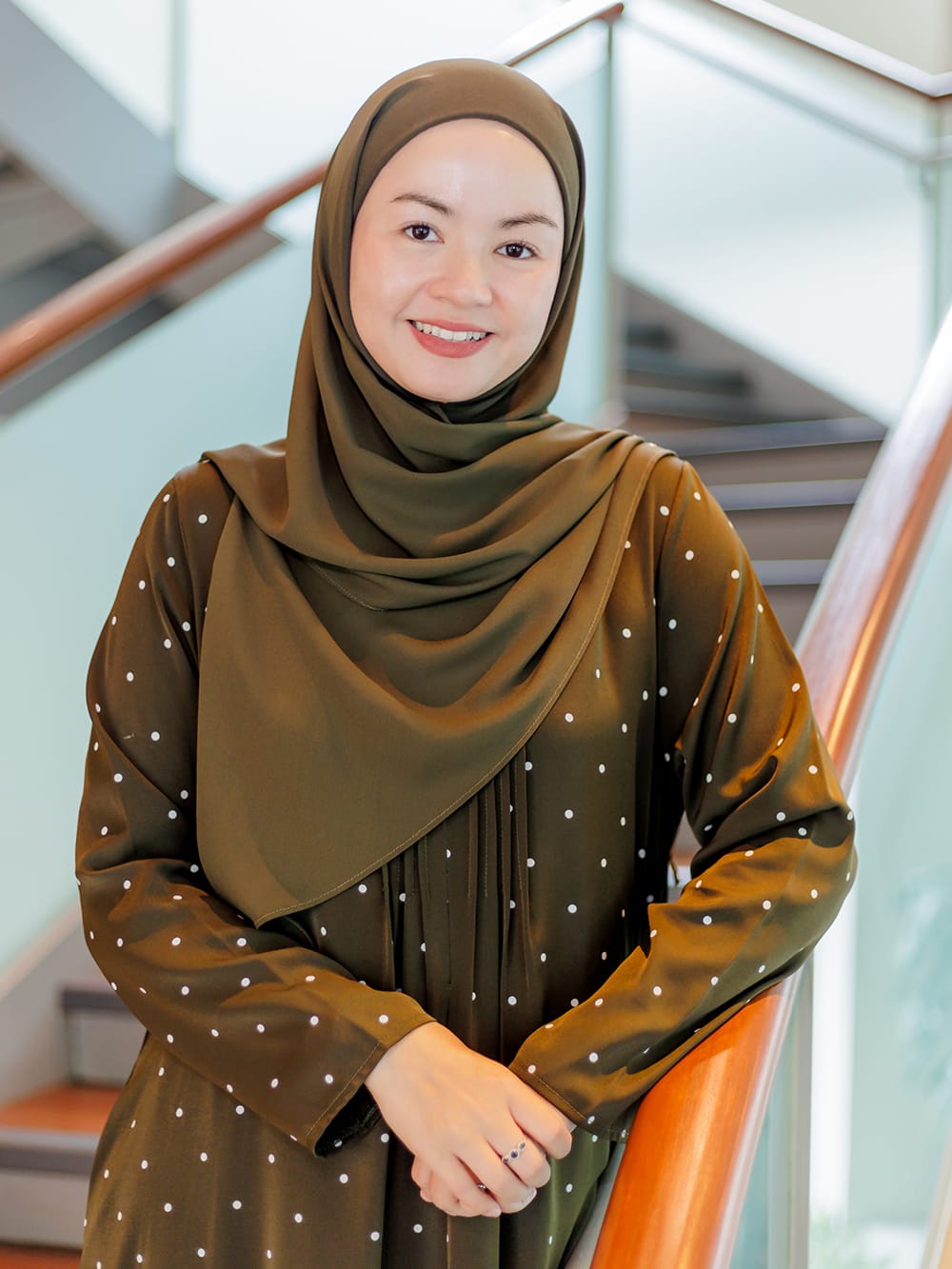
Beetsma Diana Husna Zamily serves as the Head of Governance & Standards in Halal Certification at MUIS.
Witnessing Change Firsthand
For Beetsma, Firdaus, and Herman, finding fulfilment comes from seeing the tangible impact of their work on the community.
Herman’s most meaningful experience came from the virtual and augmented reality initiative at Madrasah Al-Arabiah. He recalls a religious teacher who, though not tech-savvy, showed remarkable determination to master this new technology. “Her motivation was not about the technology itself, but her deep commitment to helping her students learn better,” he said. Despite early hurdles, she was able to design immersive lessons that brought historical Islamic contexts to life. Students who had struggled with traditional methods became noticeably more engaged. “Seeing their eyes light up reminded me why our work in madrasah education is so crucial. We are not just teaching but transforming lives through the blend of tradition and innovation,” Herman remarked.
For Beetsma, it was a poignant moment when a small business owner shared how halal certification expanded their livelihood. “Behind every process and every checklist are people — families and communities who benefit directly from the trust our systems provide,” she reflected. “That human impact is what makes the work deeply meaningful.”
Firdaus experiences this impact both at work and as a Zakat Befriender. During one home visit, he encountered a beneficiary whose broken rice container had allowed rice bugs to infest their food supply — a problem unnoticed due to poor eyesight. Firdaus quickly coordinated with the local mosque for a replacement. Reflecting on this experience, he shared: “While my daily work involves financial figures and policy frameworks, experiences like these remind me of the real-world impact of effective mosque financial governance.”
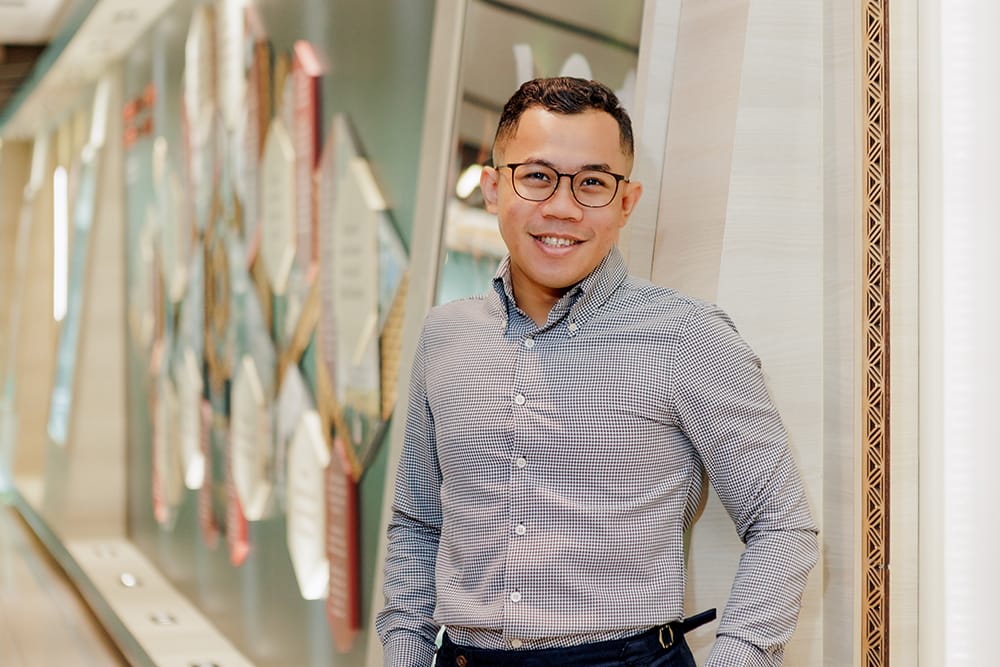
Muhammad Firdaus Bin Hassan is a Manager, PolicyFutures in MUIS’ One Mosque Sector.
Growing Through Service
Beyond volunteering, MUIS offers ample opportunities for professional growth. Through initiatives like the Invest in Learning for MUISian (‘ILM) scheme, employees can access leadership development and skills upgrading, making continuous learning accessible to everyone at MUIS.
Herman has experienced this culture of growth firsthand. “A highlight of my professional journey was the opportunity to pursue a Master of Arts in Leadership and Educational Change,” he shared. The programme broadened his perspectives on educational leadership and curriculum development, enriching his approach to implementing and improving madrasah education.
For students and young professionals starting out their careers, Beetsma advises building strong foundations in their field while staying open to applying skills in unexpected places. “Often, the most fulfilling careers are those where you can use your skills to make a real impact,” she said with a smile.