

Angela Cortez-Allen is Managing Director at Aureus Academy. She holds a Bachelor’s degree in Music (Hons) from the Royal College of Music (UK).
Music was always part of Angela’s life, from records playing at home to songs on the TV and stereo. Somewhere amid those melodies, Disney songs found their way into her heart.
She sang them loudly and often enough that her parents decided to channel that enthusiasm into piano and voice lessons.
Thirty years later, that childhood fascination has taken her from the stage to the classroom and, unexpectedly, into business leadership. Angela is now Managing Director of Aureus Academy, one of Singapore’s largest music education groups. On any given weekend, she may also be found on stage, performing as an operatically trained mezzo-soprano.
It is an unusual pairing of careers. But for Angela, the two have always been part of the same story.
An Audition of a Different Kind
Angela didn’t set out to build a career at Aureus. A friend referred her while she was finishing her music degree at the Royal College of Music in the United Kingdom. What she remembers most about the interview isn’t the questions. It was the experience of singing and playing piano in front of the founder himself.
“Most music schools in Singapore at the time simply looked at your qualification and hired you, no questions asked,” she said. “But I had to sing and play the piano, and answer questions directly from the founder and the Chief Operating Officer. I knew then that this organisation was serious about finding high-quality talent, not just filling a seat.”
She joined as a part-time teaching intern in 2016, then became a full-time voice and piano teacher the following year, running a studio of 50 students. It was there, while performing strongly in Summer Camp sales, that a regional manager spotted something else in her: a gift for reading people and getting them to say yes. That single observation redirected her whole career.
Learning the Business by Living It
What followed at Aureus was a series of trials by fire. As the company expanded across Singapore, Angela was handed the job of opening new centres at Eastpoint, United Square, Bedok, Nex, VivoCity, Thomson Plaza and Jurong Point. Each had to hit 100 to 200 enrolments within its first two months.
“I remember the late nights and early mornings of setting up and tearing down roadshows, in addition to running them,” she recalled. “That experience really built character.”
Then came COVID-19. With Aureus’s centres shuttered during the circuit breaker, Angela spent more than 10 hours a day, calling hundreds of families, persuading them to keep their children learning music online.
“It was one of the toughest challenges I’ve ever experienced in my career,” she explained. “But having gone through that has definitely made me stronger and more resilient.”
From there, her roles kept stacking up: Senior Director of Sales and Marketing, then Senior Director of Training, followed by Director of Customer Retention, where she more than halved Aureus’s churn rate.
In 2025, nine years after joining as an intern, she became Managing Director.
Even as Angela’s job titles changed, her life as a performer never did. She remains an active mezzo-soprano, with a career that has taken her from Singapore to stages across the US, Europe, Asia and Australia.
In October 2017, she was the featured alto soloist for the Philharmonic Orchestra’s performance of Beethoven’s 9th Symphony at Victoria Concert Hall, under the baton of Cultural Medallion recipient Lim Yau. Her performing career has also earned her awards at the NAFA Vocal Competition, New York Summer Music Festival and Académie Francis Poulenc.
A lifetime on stage has taught Angela to manage nerves, stay disciplined and embrace the pressure that comes with performing.
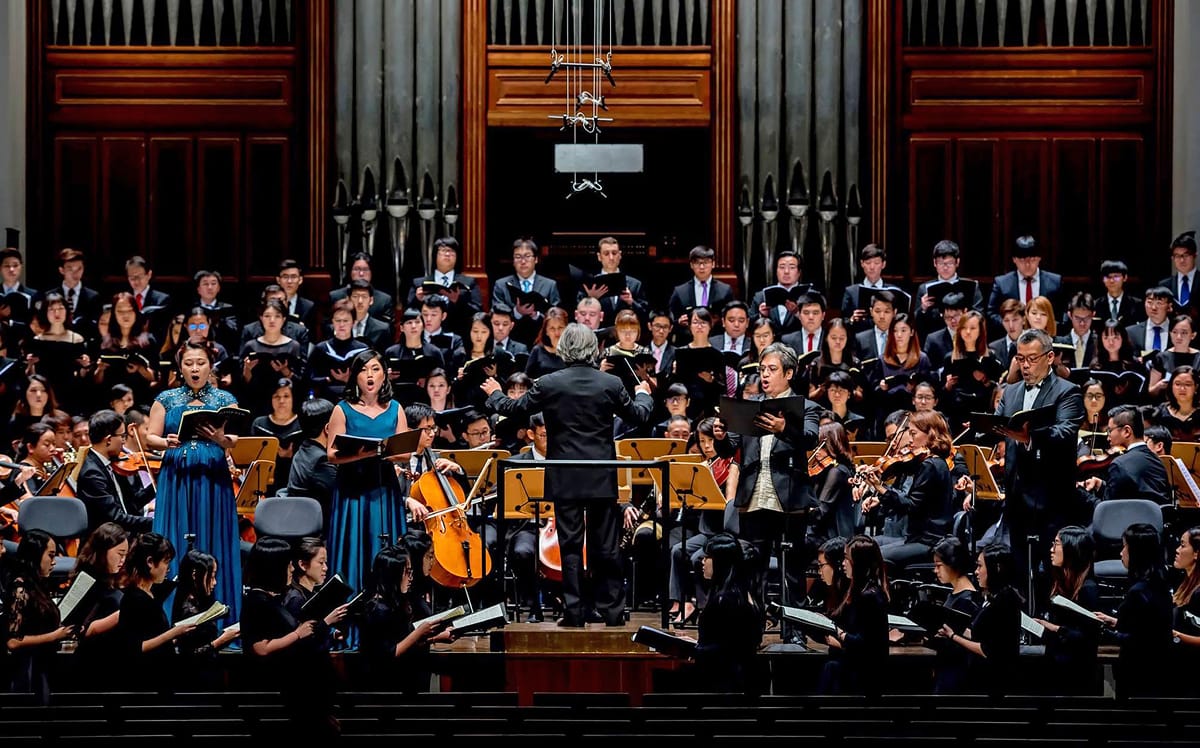
Angela (second from left, in blue) performing as a soloist in Beethoven’s Symphony No. 9 with the Philharmonic Orchestra at Victoria Concert Hall.
Beyond the Practice Room
Ask Angela how she learned to lead, and she is quick to tell you that she never took a management course or an MBA. What she had were Aureus’s co-founders, whom she describes as “voracious readers”. Their approach was simple: if you didn’t know something, go and learn it.
“It sounds like common sense, but I actually think people don’t read enough these days or wait for some sort of training course to improve themselves,” she observed. “You can only generate great output if your input is enough.”
The same belief runs through her music training, where mastery didn’t come from a certificate. It came from an unglamorous repetition of practising the hard parts until they became second nature.
“Mastering an instrument requires a lot of consistent practice and good habits, plus the skill of overcoming one’s anxiety and learning how to be confident on stage,” she highlighted. “My work ethic was shaped by my musical training — it taught me the discipline to work through challenges.”
When she’s coaching Aureus’s teachers or sitting across from a worried parent, that credibility travels with her. She isn’t an executive borrowing the language of music. She’s someone who has stood on the same stage they’re being asked to stand on.
“Whatever they’ve gone through, I’ve gone through as well,” she reflected.
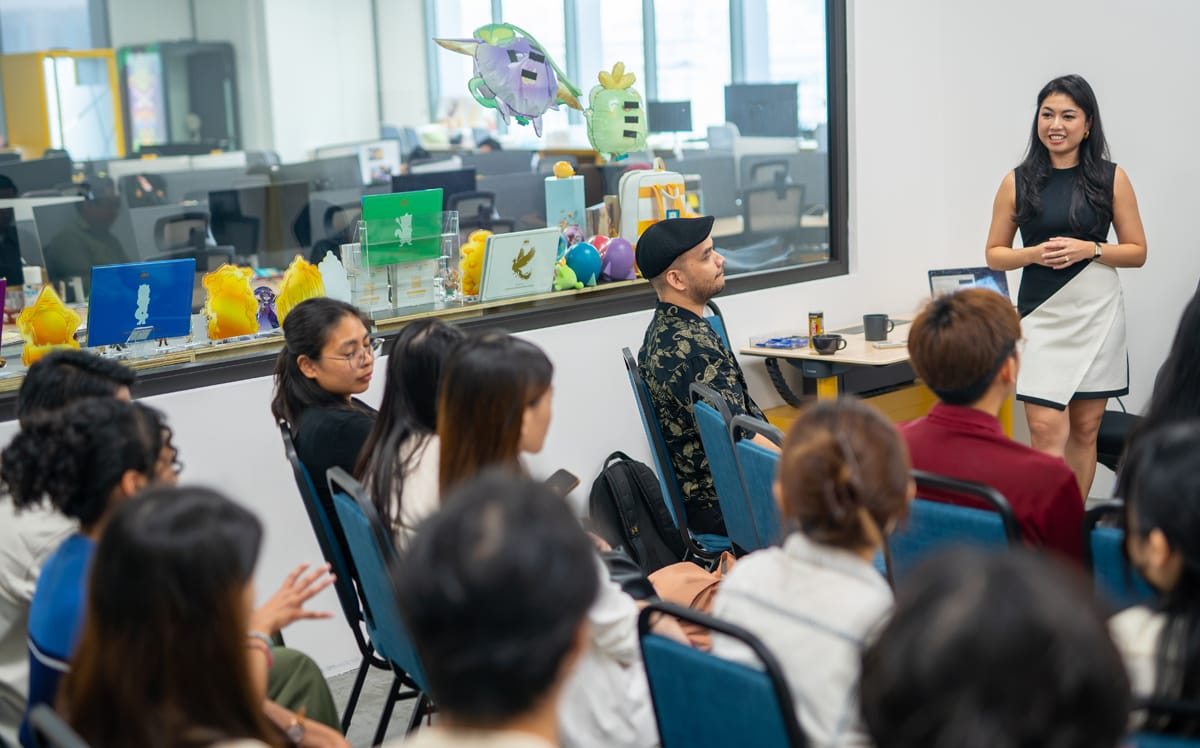
Angela Cortez-Allen
The Art of Keeping Students Inspired
Retention has become something of a specialty for Angela, and she doesn’t reduce it to a single formula. In her view, it’s an ecosystem: a teacher who genuinely inspires, parents who build practice into daily life, a curriculum that stays fun and creative, goals like recitals to work towards, and small, visible signs of progress along the way.
“There’s no greater high than having performed on stage confidently,” she noted.
More Than Musical Talent
Looking back, Angela is grateful to have found a career that brings two seemingly different parts of her life together. “I’m extremely fortunate that a company like Aureus exists, wherein I can marry my love for music with my business prowess.”
Her advice to students eyeing music education isn’t about practice hours or repertoire. It’s about something conservatories rarely teach at all.
“Being likeable, communicating clearly and confidently, these will make you a very successful teacher, much more than how much musical knowledge you have,” she advised. “You can have all the knowledge in the world as a musician, but that won’t matter if you can’t get your students to like you.”
Angela is proof of her own point. The technical skill got her in the room. Everything else is what kept her rising.