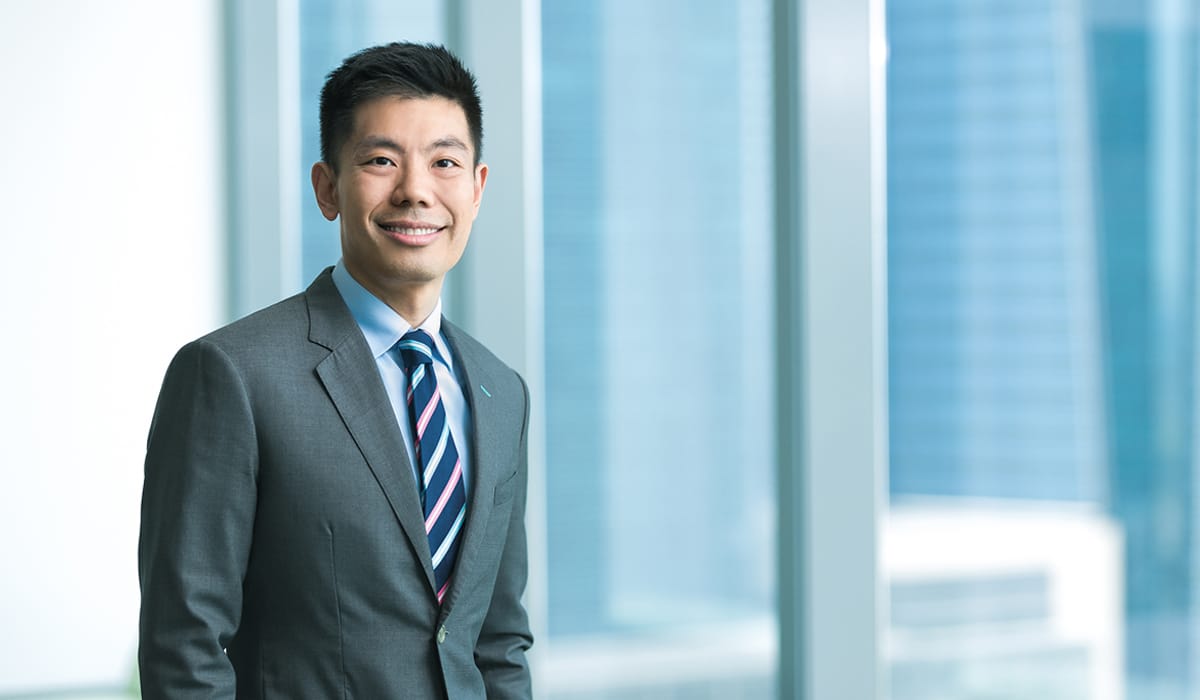
Foo Chee Keong FIA C.Act (IFoA) is Managing Director at Swiss Re. He is a Fellow of the IFoA and holds a Bachelor of Science in Actuarial Science from the London School of Economics and Political Science.
For Chee Keong and Hyder, a strong aptitude for mathematics was just the starting point. Today, they analyse risks, interpret data and help support critical business decisions across global organisations.
Chee Keong is Managing Director and Head of Life & Health Pricing and Portfolio Performance at Swiss Re in Singapore, where he leads a global team of more than 100 professionals. His career has taken him across the globe to the United Kingdom, Switzerland and Australia.
Based in Germany, Hyder is a Senior Valuation Actuary at Munich Re, overseeing reserving and financial reporting for the company’s global Life and Health Reinsurance portfolio.
Both are Chartered Fellows of the Institute and Faculty of Actuaries (IFoA), the United Kingdom’s sole chartered professional body dedicated to educating, developing and regulating actuaries worldwide. Fellowship is its highest professional qualification, recognising advanced expertise and supporting actuaries in building careers across international markets.
We spoke to Chee Keong and Hyder about their journeys into the profession, working overseas and what aspiring actuaries can expect.
Can you share how your actuarial journey first began?
Chee Keong: I chose to pursue a degree at the London School of Economics as it was one of the few universities back then offering Actuarial Science as a degree, allowing me to progress towards my professional qualification more quickly. It was also a reputable university recognised in Southeast Asia, and I initially expected to return to Malaysia or Singapore to find a job after graduation.
Instead, I decided to take a chance and apply for a job in London, where I began my career as an actuarial student. Looking back, studying there gave me far more than a qualification. It exposed me to different cultures, new ways of thinking and friendships that have shaped my career ever since.
Hyder: Singapore has always been a great place to build a career, and I expected to stay here. But I was always open to working overseas if the right opportunity came.
That opportunity eventually came after I joined Munich Re. The move to Germany was made easier by the connections I had built within the company, while my IFoA Fellowship gave employers confidence that my skills and training were recognised internationally and transferable across markets.
Hyder, what was the biggest adjustment you had to make when you moved abroad?
Being away from my family, close friends and the bonds I had built with colleagues in Singapore was the toughest part.
Professionally, I also had to adapt to a far more international working environment and step outside my comfort zone. Working with colleagues from different backgrounds has broadened my perspective and taught me new ways of approaching challenges.
On a lighter note, I’m also quite a picky eater, so adapting to food was another small but very real challenge!

Hyder Sulaiman FIA C.Act (IFoA), CA (ISCA) is a Senior Valuation Actuary at Munich Re. He is a Fellow of the IFoA and holds a Bachelor of Accountancy and Bachelor of Business (Actuarial Science) from NTU.
Can you describe what an actuary’s work involves?
Hyder: People often imagine actuaries spending the whole day crunching numbers in spreadsheets. While that’s certainly part of the job, it’s only one piece of the puzzle.
I work in the valuation team, where my role revolves around quarterly reporting cycles, analysing results and ensuring everything ties together consistently.
A big part of my work also involves collaborating with stakeholders across different functions, countries and time zones. Ultimately, we solve real-world financial puzzles by bringing together models, assumptions and market movements, then translating the numbers into insights that help businesses make informed decisions.
Chee Keong, what are some of the key lessons you’ve learnt throughout your career?
I learnt early in my career that technical skills alone are not enough. Being able to explain complex ideas to people without actuarial jargon is just as important.
Leadership is an extension of that — inspiring teams and colleagues to achieve success requires the ability to communicate and connect at a deeper level.
I also learnt that business decisions rarely come with perfect information. While actuaries are trained to seek accuracy, success often depends on making sound decisions despite uncertainty. Being able to interpret incomplete information and turn it into meaningful insights is an essential part of the job.
As technology such as Generative AI continues to reshape the way we work, how do you see the actuarial profession evolving?
Chee Keong: Generative AI is helping us work faster and more efficiently. At Swiss Re, it allows us to connect large volumes of structured and unstructured data, uncovering insights into risks that would previously have taken much longer to identify.
Technology, however, remains a tool. As AI becomes more capable, actuaries will continue to provide the professional judgement needed to interpret its outputs and make informed decisions. Rather than replacing people, AI gives us new ways to solve problems and enhance the work we do.
What advice would you give to students considering a career in actuarial science?
Chee Keong: Choose a subject that you are good at and have an interest in. Otherwise, the journey can be a very difficult one.
Once you have made your choice, success comes down to hard work, perseverance and taking the doses of good luck that come your way.
Hyder: You don’t need to have everything figured out yet. When I was younger, I didn’t know what an actuary was. I just knew I enjoyed working with numbers.
One of the things I like about being an actuary is the variety of paths you can explore. Whether it’s valuation, pricing or other areas within insurance and risk, each path gives you a slightly different perspective on the business.
Having a globally recognised qualification such as the IFoA Fellowship also helps keep those options open, giving you the flexibility to move across roles and even countries. The key is to build a strong foundation first and let the next step develop from there.
President’s Message
There are significant opportunities for Singapore’s chartered actuaries to help future-proof the nation. Beyond traditional fields such as insurance and pensions, actuaries also contribute to financial security, the sustainability of our planet, and data-driven decision-making.
Becoming an actuary means joining a profession committed to working for the public good. You could help ensure national healthcare programmes remain affordable as Singapore’s population ages, model flash flood risks to strengthen urban resilience, or use data to support better financial and policy decisions. In the age of AI, actuaries also have a role to play in ensuring automated systems and algorithms make decisions that are fair, ethical and financially sound.
Mathematics is a universal language, and an actuarial career offers immense freedom that can open opportunities in global hubs. Whether collaborating across cultures, sharing ideas or tackling global challenges, you’ll have the chance to make an impact beyond borders.
If you have excellent problem-solving skills, enjoy working with numbers, and want to make a positive impact, becoming an actuary is an ideal career for you.
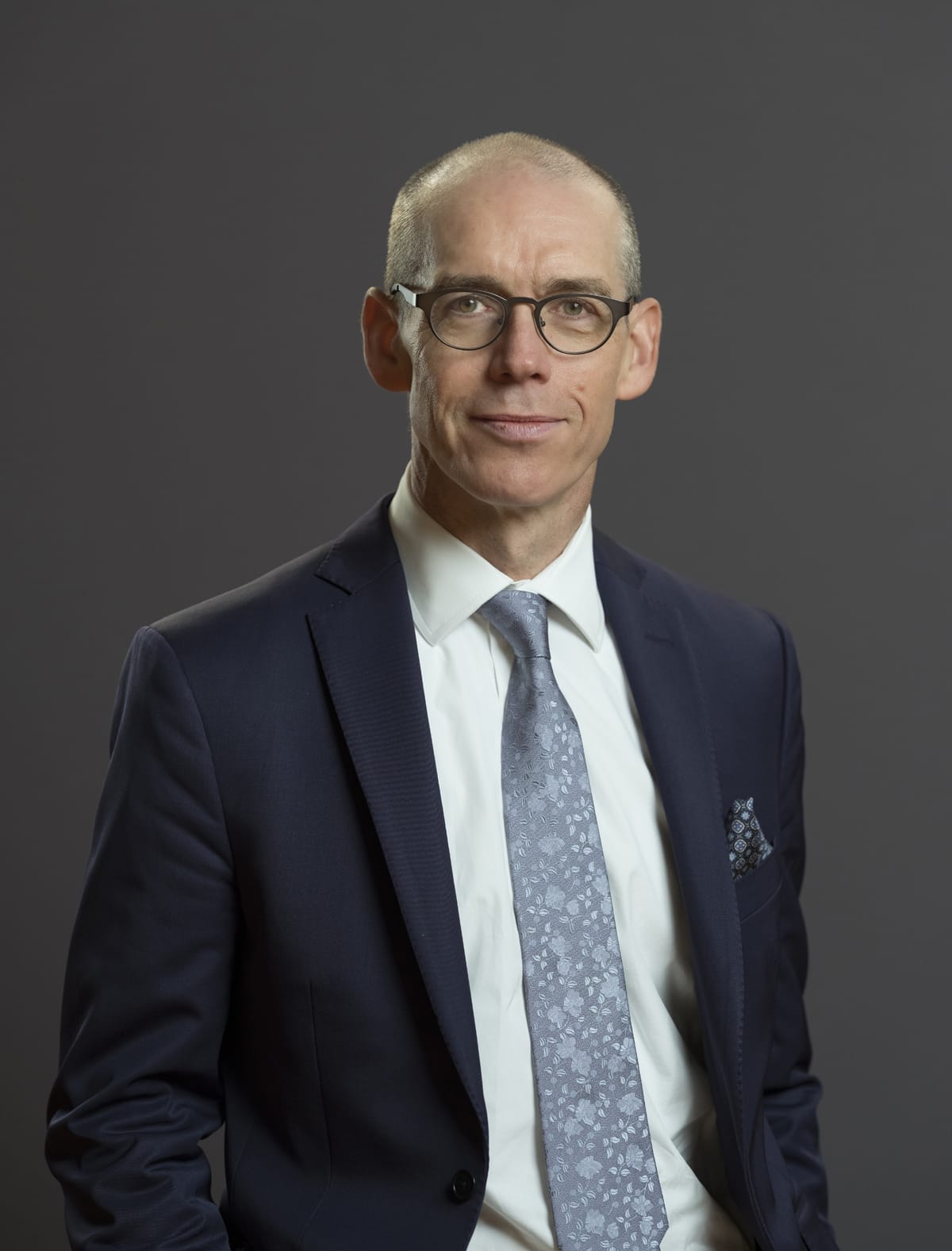
Paul Sweeting
President, IFoA