
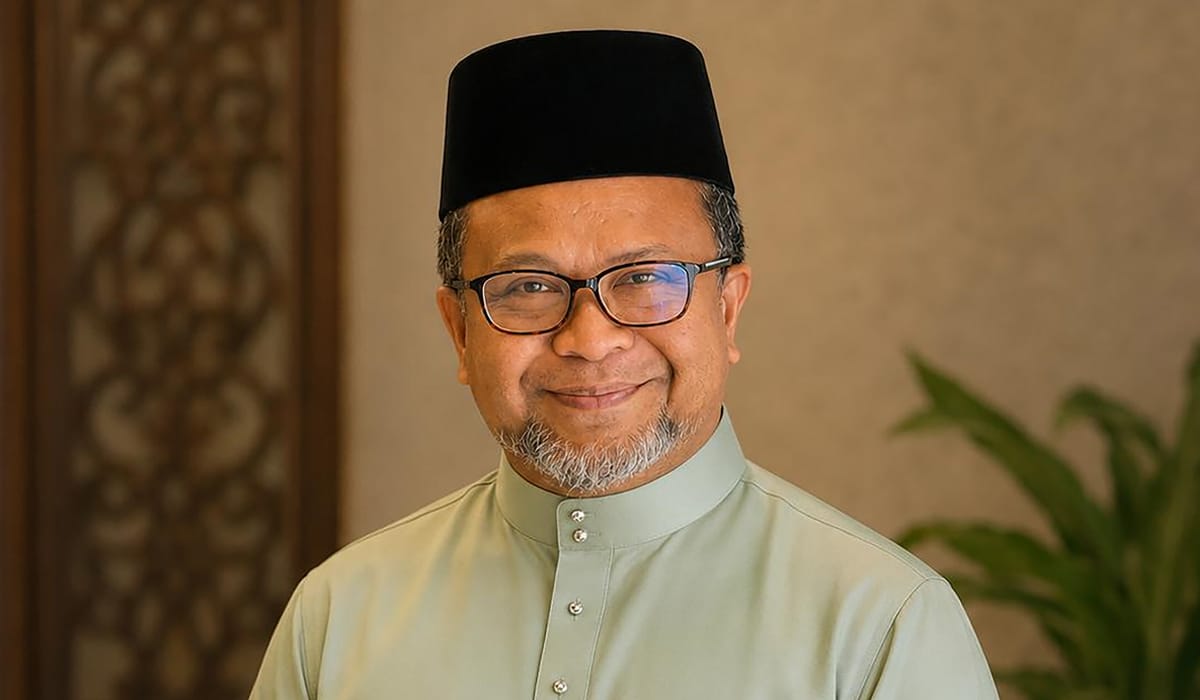
Zalman Putra Ahmad Ali is a Senior Director, One Mosque Sector. He holds a Bachelor of Science (Information Systems & Computer Science) from NUS.
There is no single path to a career at the Islamic Religious Council of Singapore (MUIS). Some arrive with a clear sense of purpose, while others find their direction through unexpected turns.
For Zalman Putra Ahmad Ali, it began with student and community leadership. For Alia Fatin Binte Abdullah, it involved a change in direction from law to communications. Muhammad Noor Iman Bin Abdul Salam, meanwhile, found a way to turn his accountancy background into a career centred on governance and community service.
Their paths may look different, but at MUIS they have found common ground: using what they know to make a difference to the community.
Zalman joined MUIS in 1998 after his student and community leadership experience caught the attention of its leaders. He became part of the newly established Office of the Mufti and Young Muslim Secretariat, where his early work focused on youth development. Among his contributions was helping establish the Islamic Intellectual Development Programme, which brought global and regional Islamic scholars and thinkers to engage with Singapore’s Muslim community.
Alia’s route was less straightforward. Having initially set her sights on becoming a lawyer, she eventually found her footing in communications, joining a government agency where she worked on nationwide campaigns. She later moved to King Abdullah University of Science and Technology in Saudi Arabia, where she worked within a community spanning more than 100 nationalities.
The experience broadened her skills in digital strategy, content and stakeholder engagement — but also changed the way she viewed communications.
She saw how the right message could help people make sense of complex issues, feel connected and find a sense of belonging. In 2018, she brought that experience to MUIS.
“I wanted to use what I had learnt in service of a community I cared deeply about,” she shared.
Noor Iman took a more specialised route. With an accountancy background, he was drawn to MUIS by the opportunity to put his financial and analytical skills towards strengthening governance and accountability.
“The opportunity to contribute to something larger than myself drew me to pursue a career with MUIS,” he said.
For each of them, the work comes back to the same question: how can it make a meaningful difference?
Leading Change in Different Ways
For Zalman, that means looking beyond the immediate needs of MUIS’ 70 mosques and thinking about what they will need five or 10 years from now.
As Senior Director, One Mosque Sector, he works with mosque leaders and community partners towards a vision of a cohesive, connected and impactful mosque sector. The work is anchored by the MasjidKITA values of Khidmah (service), Itqan (excellence), Ta’awun (collaboration) and Amanah (accountability).
Yet, amidst the strategy and planning, he keeps coming back to one priority.
“While strategy is important, our work is ultimately about people,” he said. “Every policy, programme or partnership should create real impact on individuals, families and the wider community and society.”
That people-first approach also shapes Noor Iman’s work, albeit from a different angle. As Manager, Financial Transformation & Regulatory Administration, he works across mosques and madrasahs on financial digital transformation, sustainability and regulatory compliance. The challenge is that there is no one-size-fits-all solution. Each entity has its own needs, structures and ways of working. His role is often about finding the point where those differences can meet.
“It is important to find common ground and deliberate on a viable solution,” he noted. This can mean piloting new systems, gathering feedback from the ground and working with different stakeholders before deciding what works best for the sectors.
For Alia, the work happens where MUIS meets its audience. Since joining the organisation in 2018 as a Senior Executive with Muslim.Sg, she has grown with the platform, becoming Head of Digital Media and Analytics in 2025. Today, she looks beyond likes and clicks, tracking trends, public sentiment and emerging conversations to understand what the community is really saying.
She believes that sometimes, the most useful insights are hidden beneath the surface.
“A frustrated comment may point to fear or disappointment,” she explained. “A question that keeps appearing may mean that we have not explained something clearly enough.”
For Alia, listening is part of communicating.
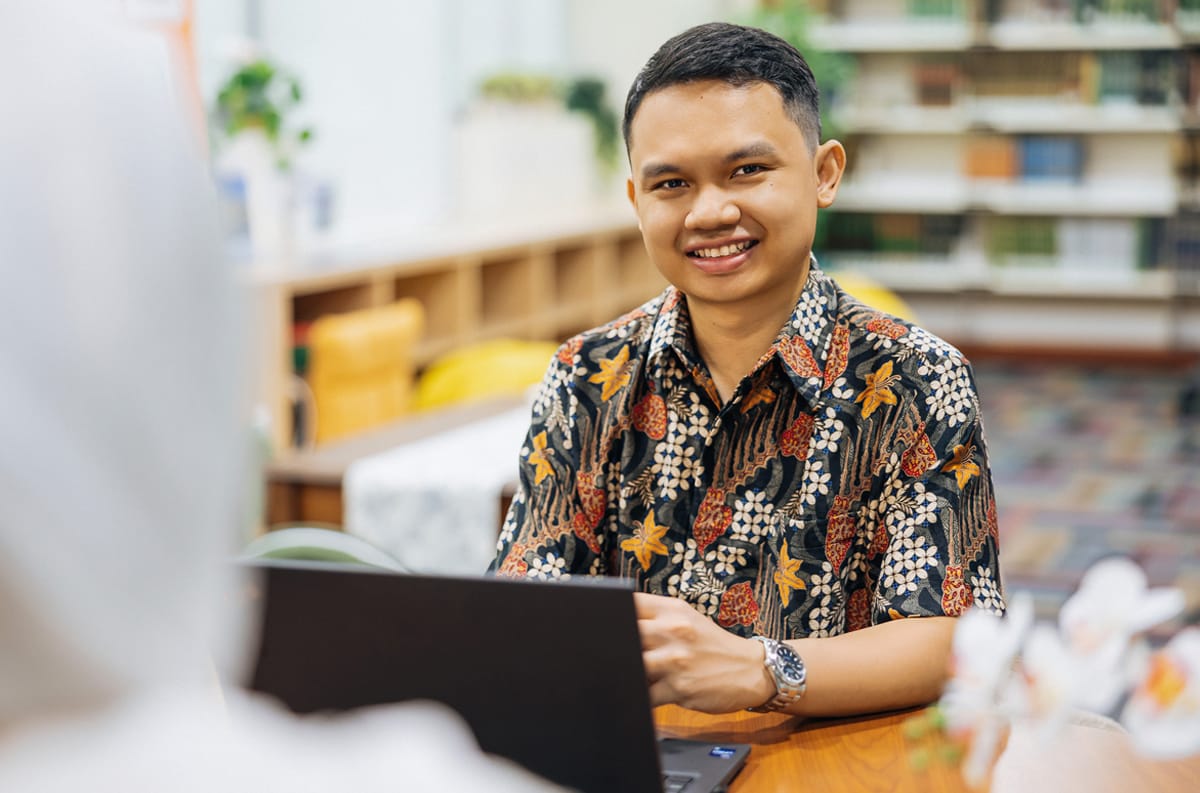
Muhammad Noor Iman Bin Abdul Salam is a Manager, Financial Transformation & Regulatory Administration. He holds a Bachelor of Accountancy from SUSS.
The Moments That Matter
The most rewarding moments, however, are often when their work moves beyond processes and creates a tangible difference for people.
Zalman has witnessed this across more than two decades at MUIS. His career has taken him through youth development, Islamic education, religious policy, interfaith engagement, Halal development and the mosque sector.
A recent milestone came in 2025, when all 70 mosques came together around a shared vision at the One Mosque Sector Summit. It reinforced a lesson he has seen throughout his career.
“Transformation is not about one individual; it happens when many people unite around a common purpose,” he reflected.
Noor Iman remembers a similar moment from early in his MUIS career, when he developed financial guidelines for sectors that previously had no clear references. What began as a technical exercise became an opportunity to better understand the challenges faced by different sectors and identify where he could provide support.
“It’s rewarding to see ideas translate into meaningful improvements,” he reflected.
For Alia, one of the projects closest to her heart was MUIS’ Haj communications effort.
“Haj is one of the most significant journeys in a Muslim’s life, so we knew the content had to be handled with care,” she shared.
Through behind-the-scenes footage, operational updates and stories from the ground, her team helped families understand the work that goes into supporting pilgrims.
“The response from the community touched me deeply,” she recalled.
It was especially meaningful when people shared that the content had helped them appreciate the work of the officers, volunteers and partners behind the pilgrimage.
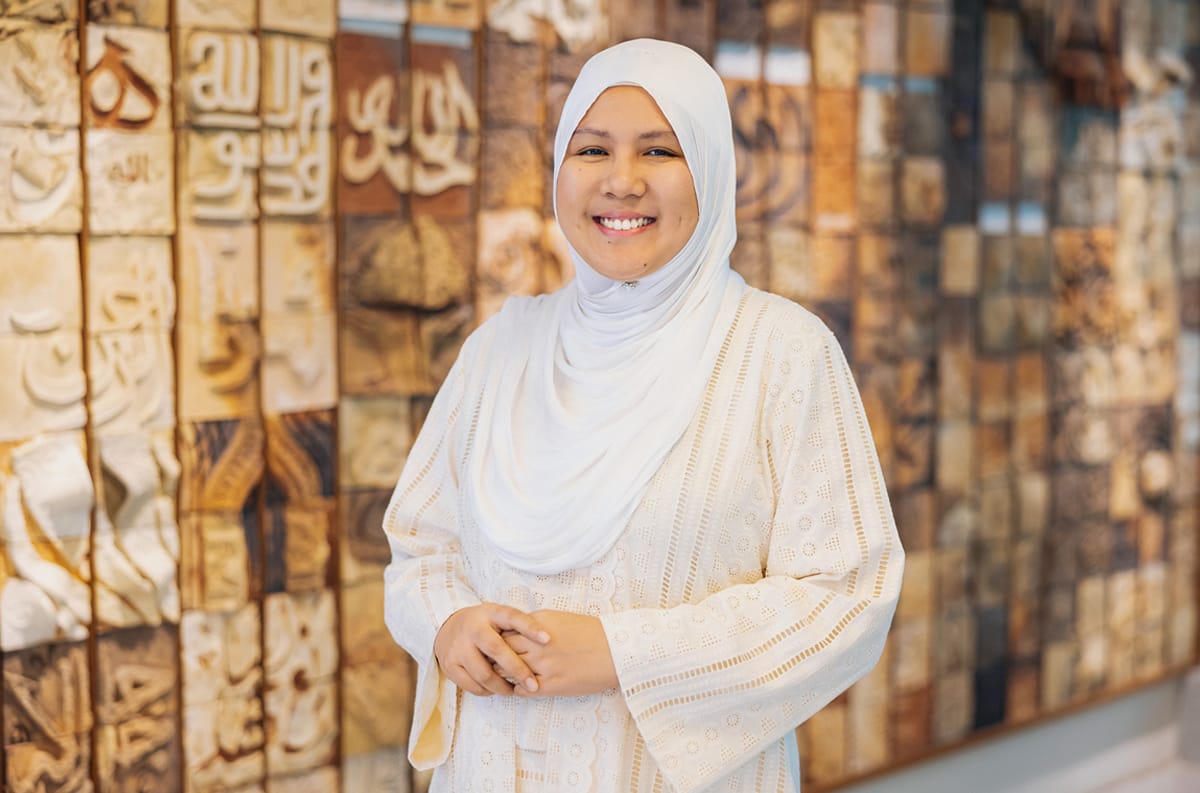
Alia Fatin Binte Abdullah is Head, Digital Media and Analytics. She holds a Bachelor of Laws from SMU.
Lessons That Stay
If their careers demonstrate anything, it is that growth does not always happen in a straight line.
Over Zalman’s 28-year journey, he has learnt that leadership is as much about having difficult conversations as it is about making decisions.
“Courageous conversations, conducted with sincerity and respect, are actually an act of care,” he said.
He has also learnt when to step back.
“Leadership is not about doing everything yourself. It is about enabling others to succeed,” he added.
Noor Iman’s career has similarly expanded beyond accountancy into digital transformation, project management and stakeholder engagement. His experience has reinforced the value of being willing to learn outside one’s own discipline.
For young professionals, the lesson from all three is not simply to pursue the next promotion. It is to build the skills, judgement and relationships that will remain useful as their careers evolve.
“Come with both competence and conviction,” Zalman advised.
Noor Iman encouraged young professionals to be open to learning beyond their area of expertise.
For Alia, whose own career took an unexpected turn, there is perhaps a lesson in the detours.
“A detour is not necessarily wasted time. It may teach you something that the original path never could.”