
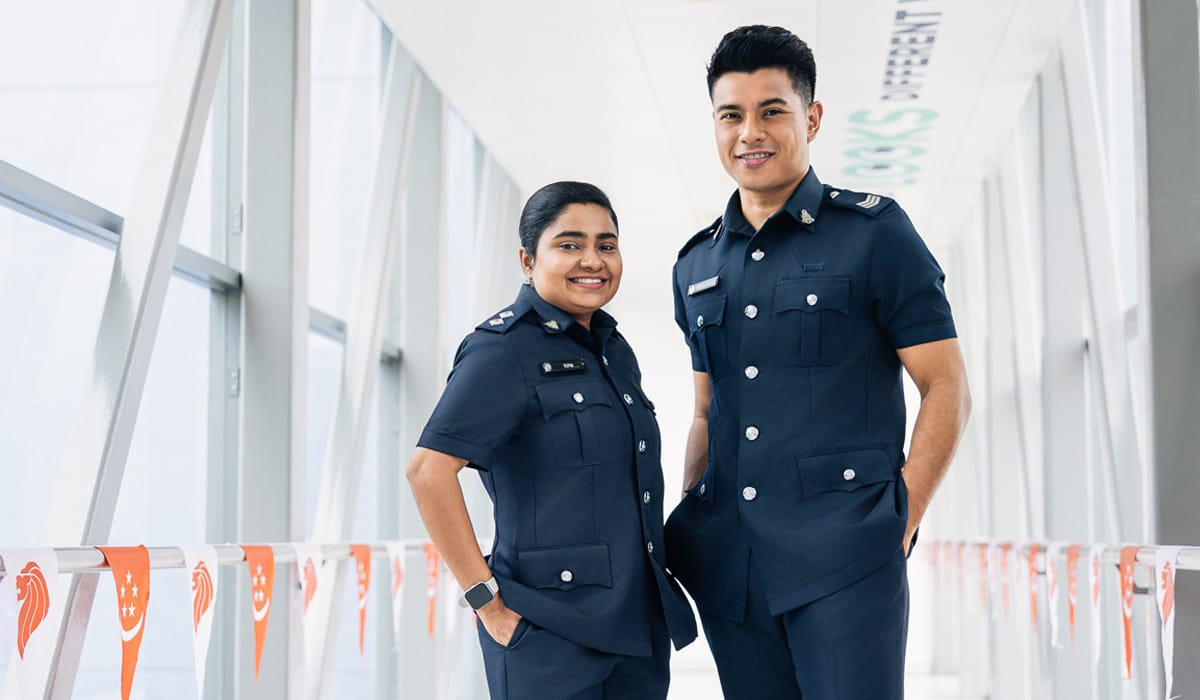
Left: Rupini D/O Anandha Krishnan is a Senior Correctional Unit Officer at Institution B4. She holds a Bachelor’s degree in Business (Management).
Right: Muhammad Faresh Hakim Bin Mohd Yazid is a Correctional Unit Officer at Institution TM1’s Reformative Training Centre. He holds a Diploma in Biomedical Engineering.
The smallest gestures can often go a long way: a word of encouragement, a listening ear or simply giving someone space to talk. For Faresh and Rupini, these everyday moments are part of helping someone move forward.
As Prison Officers with the Singapore Prison Service (SPS), where officers are also known as Captains of Lives, they take on a range of responsibilities, from overseeing daily operations to supporting the physical and emotional well-being of inmates in their care. Their work forms part of SPS’s wider efforts to support rehabilitation and help inmates prepare for life after prison.
We sat down with the two officers to find out what working in corrections is really like, and what it takes to support someone through change.
What made you take the leap and join SPS?
Faresh: Growing up around family members in public service, including my mother and brother, inspired me to value the same discipline, strong values and sense of purpose.
My interest in SPS grew during National Service, when I served as a Ground Response Force officer at Geylang Neighbourhood Police Centre. Responding to incidents and helping members of the public made me curious about what happened to persons of interest after an arrest. I wanted to understand the full journey from law enforcement to rehabilitation.
After exploring different agencies and speaking with officers at career fairs, I chose SPS because it offered a meaningful opportunity to guide, support and positively influence people at an important turning point in their lives.
Rupini: I was drawn to SPS by the opportunity to be part of a mission focused not just on punishment, but on rehabilitation and reintegration. The role demands integrity, resilience and a genuine desire to help others, which I find incredibly motivating.
What does your work look like on the ground?
Faresh: A typical day at Institution TM1’s Reformative Training Centre begins at our newly rebranded Crossroads Café. Over breakfast, my team and I discuss the day’s plans and operational priorities — and make sure everyone is properly fuelled!
We then attend our briefing and conduct the opening muster check to ensure that every reformative trainee is accounted for. The day continues with supervising medication issuance or yard time, conducting rehabilitation programmes, as well as coordinating visits, interviews and other appointments.
Whenever operations allow, we also engage the cohorts under our care, follow up on requests and accommodation changes, and address their concerns.
Rupini: At Institution B4, our day begins with a morning muster check and unlocking procedures. We then supervise breakfast and medication issuance before moving on to classes and Out-of-Cell Activities, such as television or yard time, and following up on inmate requests.
As the Programme Coordinator for my unit, I also oversee various classes and programmes.
Faresh, how do you approach interactions with those under your care while maintaining your role as an officer?
I make a conscious effort to build rapport with the reformative trainees so they feel comfortable opening up about their concerns and challenges. When trust is established, we are able to better provide meaningful guidance. At the same time, it’s important to remain professional and set clear boundaries.
I would describe the approach as being firm on standards, but human in delivery. Discipline provides the safety and structure we need, while care and encouragement can help someone believe that change is possible.
Can you share an experience where that approach made a difference?
Faresh: I once supervised a reformative trainee who had to be housed alone throughout his six-month sentence. Whenever operations allowed, I made it a point to spend about 10 minutes engaging him during my shift. We spoke about his life, family challenges and hopes for the future, and those short conversations gradually built trust.
About a week before his release, he thanked me for taking the time to speak with him and said those conversations had made a real difference during his sentence. He even told me he regarded me as one of his role models.
That stayed with me because it reminded me that rehabilitation does not always begin with a grand speech or dramatic breakthrough. Sometimes, it begins with 10 sincere minutes, repeated consistently.
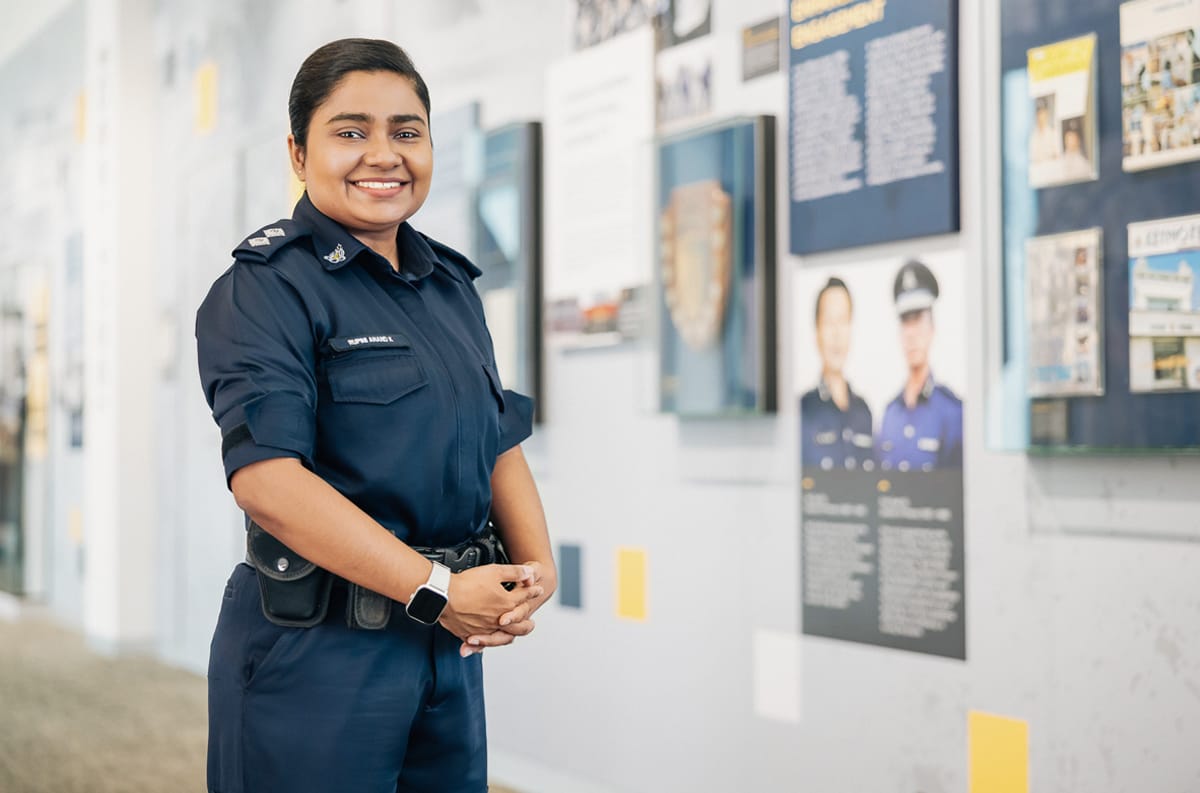
Rupini D/O Anandha Krishnan
Rupini, can you tell us about a rehabilitation programme you’ve worked on that was meaningful to you?
We created the Recallee Circle to help recalled inmates understand the reasons behind their recall and equip them with tools to avoid future recalls. It provides a safe space to share experiences, learn from one another and offer mutual encouragement and guidance.
Since the pilot in August 2025, we have conducted multiple runs, reaching over 100 inmates. One participant was initially reluctant to engage, but I encouraged him to join. As the sessions progressed, I saw a remarkable shift as he went from hesitant participation to contributing confidently on his own initiative.
During the final session, he thanked me for encouraging him to join and spoke about the lessons he had learnt from peers and facilitators. His unexpected expression of gratitude made me realise the impact of what I do.
For me, the most rewarding aspect of my job is witnessing genuine transformation and seeing individuals take meaningful steps towards a better future.
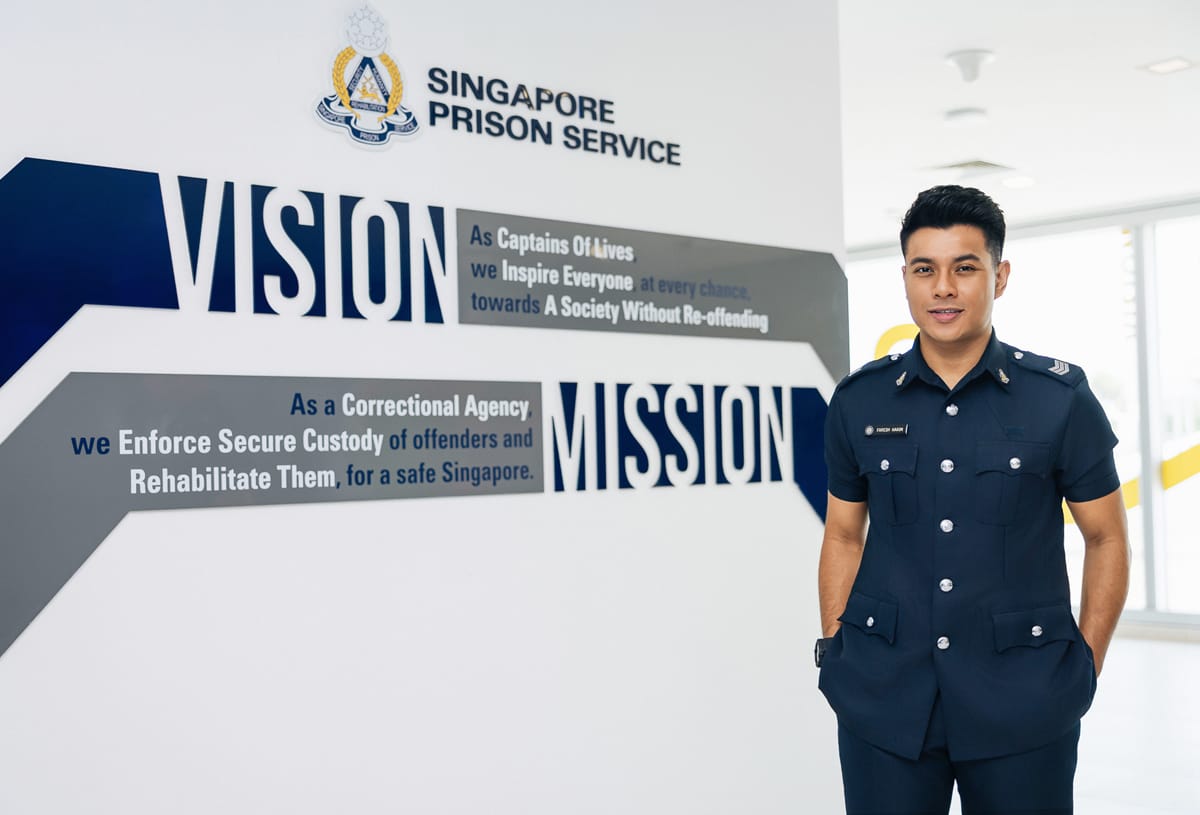
Muhammad Faresh Hakim Bin Mohd Yazid
The job can also bring unexpected moments. Faresh, has there been one that has stayed with you?
In 2022, two reformative trainees slipped into an open cell and began fighting as I was locking them in after yard time. My team and I responded immediately, assessed the situation and used OC spray (oleoresin capsicum spray, commonly known as pepper spray) to stop the fight before separating the two trainees.
The experience reinforced the importance of staying vigilant, as situations can change within seconds. Effective incident response is not about being fearless. It is about staying composed under pressure, following procedures and trusting your team. Adrenaline may arrive first, but training must take the lead.
For someone considering a career with SPS, what would you want them to know?
Faresh: SPS offers a range of career paths, from ground operations to areas such as administration, planning, finance, rehabilitation and psychology. But before joining, I would encourage people to understand the realities of the job.
The training is demanding, and some days will stretch your patience, confidence and energy — sometimes all three before lunch! If you are genuinely motivated by service and supporting rehabilitation, that sense of purpose can become your anchor when the work gets challenging.
Rupini: A career as a prison officer has its challenges, but it can be a rewarding one for those who are dedicated, resilient and committed to both upholding the law and fostering inmate rehabilitation.